
Cleared in One District, Unknown in the Next: The K-12 Screening Gap Nobody Budgets For
Effective 1 March 2025, Florida requires Level 2 vetting — biometric, fingerprint-based checks — of volunteers, replacing the previous name-based Level 1 standard. Texas requires fingerprint-based FBI background checks through the Texas Department of Public Safety for staff, substitutes, contracted staff and volunteers working directly with students. Indiana requires fingerprint-based FBI and Indiana State Police criminal background checks for volunteers at schools and childcare centers.
This is all good news. Fingerprint-based background checks are the gold standard: they involve taking biometric data from an individual, in person, and running that data through national repositories of criminal history. Many industries and sectors, from healthcare to corporate, aspire to checks of this standard.
So what's missing?
Persistence: criminal activity after the check
The problem is not about implementing stricter background checks — fingerprint-based criminal history checks are as thorough as it gets. It's about making sure those checks persist. The problem is not digging deeper. It's digging more often.
Right now, most background checks are a snapshot in time, revealing whether someone was eligible to work on the day they were screened. Thankfully, mechanisms for persistence exist. The FBI's Rap Back system stores an individual's fingerprints so that if they are ever arrested again, the school district is notified. There is no need to rescan, because Rap Back is a form of continuous monitoring. It turns background checks into background monitoring.
Enrollment, however, has historically been opt-in, which means districts can fall through the cracks. Saint Louis Public Schools implemented fingerprint-based criminal history checks but missed Rap Back enrollment for staff hired before 2016. In its first year, Missouri's Rap Back program received hundreds of notifications for individuals who were arrested despite having been cleared.
Portability: the cost of repetition
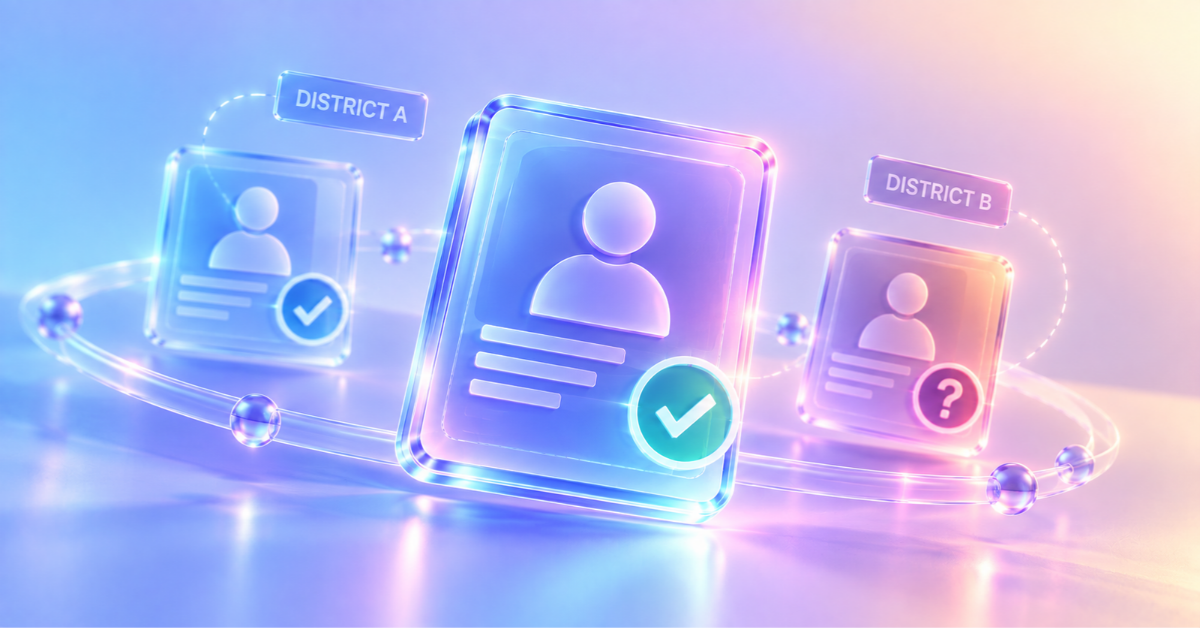
Background checks are expensive and slow, and in our current system they must be repeated every time a new organization requests one. Records are siloed with the organization that requested them. Sometimes they can be "cloned," but that process is highly manual and not always possible — Florida's Level 2 FALCON background checks can't be added to the Clearinghouse, for example.
Turnaround can be anywhere from the 7 to 10 days commonly cited by districts up to eight weeks. In Indiana, FBI fingerprint-based checks take two to four weeks, while name-based checks take one to three days.
This falls hardest on volunteers and contracted staff. A contractor might be hired by a school district, a sports league and a community organization — paying for background checks repeatedly, and waiting weeks each time. A volunteer might work at a summer day camp one year and a church the next, and face the same thing again. Volunteers are often expected to pay for the checks themselves, which is an unnecessary burden on the very people donating their time to uplift our students.
And the friction has consequences. To work around the requirements, some programs allow volunteers and contractors into buildings temporarily, which isn't always safe, or classify a position as "supervised," which isn't always accurate, so that fingerprint-based checks aren't required.
Verification: who's standing at the door?
Background checks tell us whether Jane Doe is eligible to volunteer at Lincoln Elementary. They don't tell us whether the woman at the front door wearing a Jane Doe volunteer badge is really Jane Doe.
Most teachers and administrators are permanent fixtures — they show up every day, so it's easy to know who belongs. But who are the technicians from the air conditioning company? The carpenter who rotates between schools? The person who helps at the spring concert but nowhere else during the year? How do you know they're who they claim to be?
What districts can do
1. Go beyond one-and-done checks
Background checks are great, but they aren't enough on their own. Criminal activity can occur after initial screening, which makes continuous monitoring critical.
Rap Back and similar programs should be used by every school district. But enrollment may be limited to new hires, so it's important to audit past hires to confirm they're included. Saint Louis Public Schools, for example, found they could not enroll historical fingerprints, and are working to determine who was hired before 2016 — when automatic enrollment of new hires began — and whether those people are still employed.
2. Validate identities at the point of access
A background check confirms eligibility. It does not confirm that the person presenting the clearance is the person it was issued to. In K-12, where personnel rotate constantly, that distinction matters most at the door.
Cerebrum's vID validates an individual's identity against their original background check using biometric authentication, adding a safety net around the check itself.
3. Give volunteers their results, and make them portable
Volunteers are integral to many districts, and increasingly they're expected to have background checks. ESSA sets broad student safety expectations, while each state establishes its own requirements — which is exactly why portability breaks down.
A volunteer with a sports league may also help at church and donate time to community programs, potentially in another city or state. Each organization may require its own check, creating wait times and confusion. If they're a teacher or coach in another district, they have to work out whether they can clone an existing check or must start over. Cloning isn't always allowed, depends on the state's system, and requires validation from the original district.
One solution: after you supervise the background check yourself, give volunteers their results in a portable credential they can present to other districts and youth-serving organizations, eliminating wait times and duplicate searches. Cerebrum's The Wallet enables districts and organizations to issue background check results directly to individuals for future use.
4. Ask questions of contracted services
Schools aren't expected to know everything about background check requirements, but they should know who's providing contracted services to kids. Make sure contracts set out expectations for proof of background checks, how often they recur, Rap Back monitoring, and requirements when personnel are replaced.
How identity technology improves background checks
Cerebrum isn't calling for lessening or replacing FBI fingerprint-based background checks — nor can we. But identity technology has an important role in maintaining safe schools. Our products:
- vID validates the identities of those with cleared background checks
- The Wallet makes background checks portable, improving efficiency for volunteers and contractors
- Synapse automates and streamlines background check administration, and helps districts prove compliance
Background checks are the gold standard for youth-serving organizations. We can learn from other industries — healthcare, for instance, uses a national database for license verification — to streamline the process in K-12.
Let's work together to keep kids safe.
Subscribe to our newsletter to get the latest updates and news